Community Initiatives
From 2022 to 2026, we worked in the Fondo neighbourhood (Santa Coloma de Gramenet) and Sant Cosme (El Prat de Llobregat) to promote healthy and sustainable food environments.
We initiated this transformation through the Alison Community, which brings together more than 100 organizations. During this process, the Community prioritised advancing the transformation by designing and implementing community-based initiative pilots that combine educational workshops with community gardens, community kitchens, community agroecology, food-buying groups and entrepreneurship workshops. These initiatives were adapted to different cultural contexts thanks to the coordination and facilitation role of community leaders. These pilots included an iterative process of reflexive monitoring and evaluation activities, including a survey and focus groups.
Subsequently, as these initiatives can be challenging to sustain and scale, the Alison Community developed a participatory process to plan the exploitation of results. The principles underpinning the community-based initiatives were identified, and recommendations were co-designed to support their adoption by retailers, restaurants and other food establishments. These results will be disseminated through an international communication campaign.
Coordinated by:


With the support of:


Funding:




Collaborative strategy
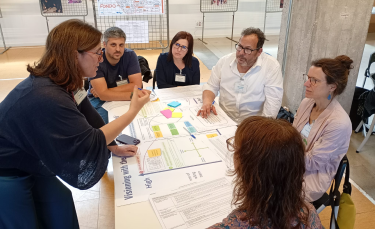
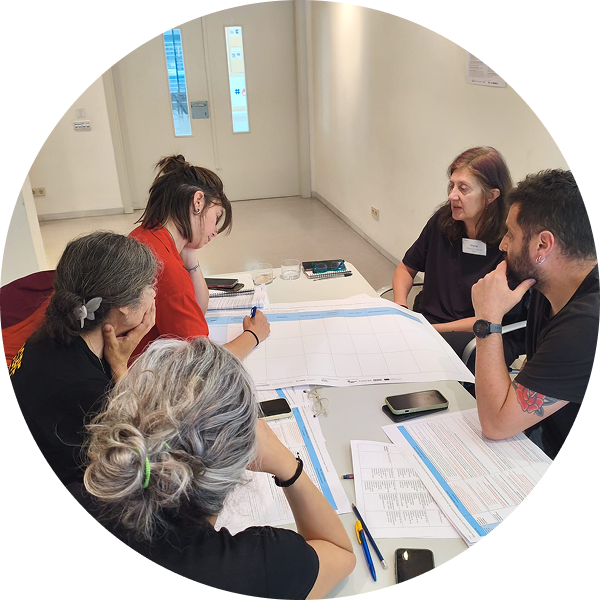
With the participation of over 100 organizations, we engaged in collaborative experimentation to assess neighborhood food environments, develop collaborative strategies, and co-design pilot projects. The focus was on alternative community-based initiatives, combined with informational, educational, and entrepreneurial activities.
During this process, the IrsiCaixa Health Living Lab and participants generated knowledge on how to facilitate systemic innovation processes, which was disseminated through this methodological guideline, available in English and developed as part of the European project CLEVERFOOD.

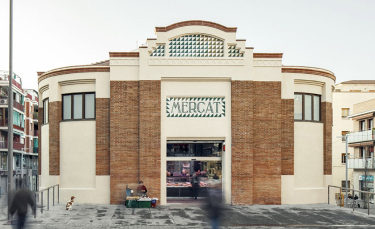
Fondo is a neighbourhood in Santa Coloma de Gramenet, located in the Besòs area of the Barcelona metropolitan area. It is mainly characterised by its high population density and great cultural diversity. The neighbourhood has a well-developed commercial network that is easily accessible on foot. There is a public market providing access to fresh and healthy food, as well as a variety of supermarkets offering more affordable prices.
There is also a high number of bars and restaurants offering a wide range of options, both in terms of quality and cultural backgrounds.
On the other hand, the neighbourhood lacks community urban gardens and, more generally, stronger connections with nearby agricultural production that could encourage the consumption of locally produced food.
Although there is no community initiative specifically dedicated to food, there are several community and educational initiatives.

Sant Cosme is a neighbourhood in El Prat de Llobregat, located in the Llobregat delta, within the Barcelona metropolitan area. It is a low-density neighbourhood with a stable population. Despite its current connections, Sant Cosme still has a peripheral character and a sense of isolation.
The food offer is limited, with few fresh food options, which are relatively expensive, and few bars and restaurants, with a conventional and generally unhealthy offer.
However, there are initiatives and resources that contribute to improving the situation. The local health centre and educational centres actively promote healthy eating habits among the population. In addition, Sant Cosme is home to La Cuina de Barri, an innovative project that provides affordable and healthy meals to local residents. Many neighbours from Sant Cosme also use La Botiga, a food security supermarket.
The neighbourhood is located close to a protected Agricultural Park and has weekly markets offering fresh fruit and vegetables, although these are not always an accessible option for residents. There are also public urban gardens in the surrounding area.
Community initiatives
We established a core group comprising 15 organizations and, together, carried out pilot community initiatives involving various communities. Participatory research and evaluation processes were also conducted. Through these pilots, more than 300 people from different communities joined the Alison Community. Explore the community initiatives below:
Community kitchens
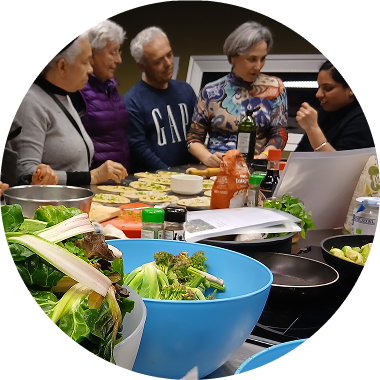
Healthy and sustainable cooking workshops: participatory and educational cooking sessions that foster learning environments and mutual support (in both neighbourhoods).
Community cooking: groups of people meet regularly to plan, cook and share healthy and sustainable meals (in Fondo).
Community kitchen: a community cooking pot is used to prepare healthy, sustainable and affordable meals in large quantities, so people can fill their lunchboxes at midday (in Sant Cosme).


Nikoletta Theodoridi, Gabriela Espinoza, Alice Mansua Donkor, Saba Mohamed Bibi

Community agroecology
Farming workshops: growing sessions in a neighbourhood garden to revitalise an agroecological space and reconnect with the land and its productive capacity (in both neighbourhoods).
Community agroecology: regenerative agroecological production activities in which consumers build relationships with local producers, participate in food production and share the harvests (in Fondo).


Consumer groups
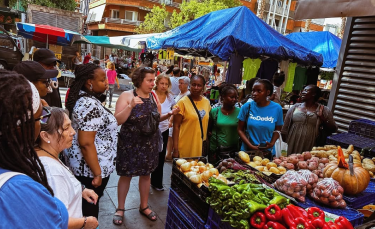
Consumer group: a group of people who buy directly from local producers and food makers to facilitate access to healthy and sustainable products from short supply chains and produced fairly (in both neighbourhoods).
Nikoletta Theodoridi

Food surplus redistribution
Food surplus redistribution: surplus food distribution points receiving food from shops, supermarkets, catering services and food service establishments, for local residents and community cooking activities (in Fondo).


Learning
Community learning on food and nutrition: participatory educational activities to promote healthy and sustainable habits, taking into account socioeconomic and cultural diversity (in both neighbourhoods).
Nikoletta Theodoridi, Gabriela Espinoza, Alice Mansua Donkor, Saba Mohamed Bibi

Entrepreneurship
Entrepreneurship programme: participants are trained to develop entrepreneurial initiatives in the food sector (in Fondo).


Exploitation of the results
As community-based initiatives can be challenging to sustain and scale, we explored whether the principles that define them could be adopted by the current food system.
To this end, we carried out a collaborative experimentation process through nine workshops involving more than 100 organizations from the local, national and international levels. We identified ten principles that food environments should enable, grouped into five categories: (1) equitable access to healthy and sustainable food, (2) citizen participation in decision-making, (3) reliable information and education on healthy and sustainable diets and their impacts, (4) community initiatives for food sharing, and (5) surplus food management.
Finally, we co-developed 18 recommendations for action, encompassing both public and private policies to support these principles, and disseminated them through a Policy Brief.
To advance the implementation of these recommendations, new pilot projects have been designed and will be implemented during the 2026-2028 period.
Results:
The results will be disseminated through the following documents:
- Impact report on the community-based initiatives (available soon)
- Principles of the community-based initiatives (available soon)
- Recommendations for the exploitation of results (available soon)
- Policy brief (policy recommendations document) (available soon)
Timeline
November 2022 - July 2023
Collaborative strategyAssessment of the food environment in the neighbourhoods
September 2023 - April 2024
Collaborative strategyDefinition of the shared strategy
May 2024 - April 2025
Collaborative strategyEngagement of organisations and communities, identification of spaces
October 2024 - April 2025
Collaborative strategyCo-design of the organisational model and action plan. Baseline survey
May 2025 - June 2026
Participatory pilotsImplementation of the community initiatives. Iterative reflective evaluation and final survey
February 2026 - July 202
Exploitation of the resultsResults Exploitation Planning Process
Fall 2026
Participatory pilotsPresentation of the results in the two neighbourhoods
Launch of a new cycle to experiment with pilots aimed at enabling the principles of community initiatives to be adopted by shops, restaurants, supermarkets, etc.
Discover other pilot projects